October 2026 · Build-to-suit
Build-to-suit: who carries the risk when reality differs from the model
In build-to-suit investing, the headline economics are only the starting point.
A project may appear attractive: a creditworthy tenant, a long lease and a compelling projected return. But the investment case depends on details that can shift costs, timing and risk.
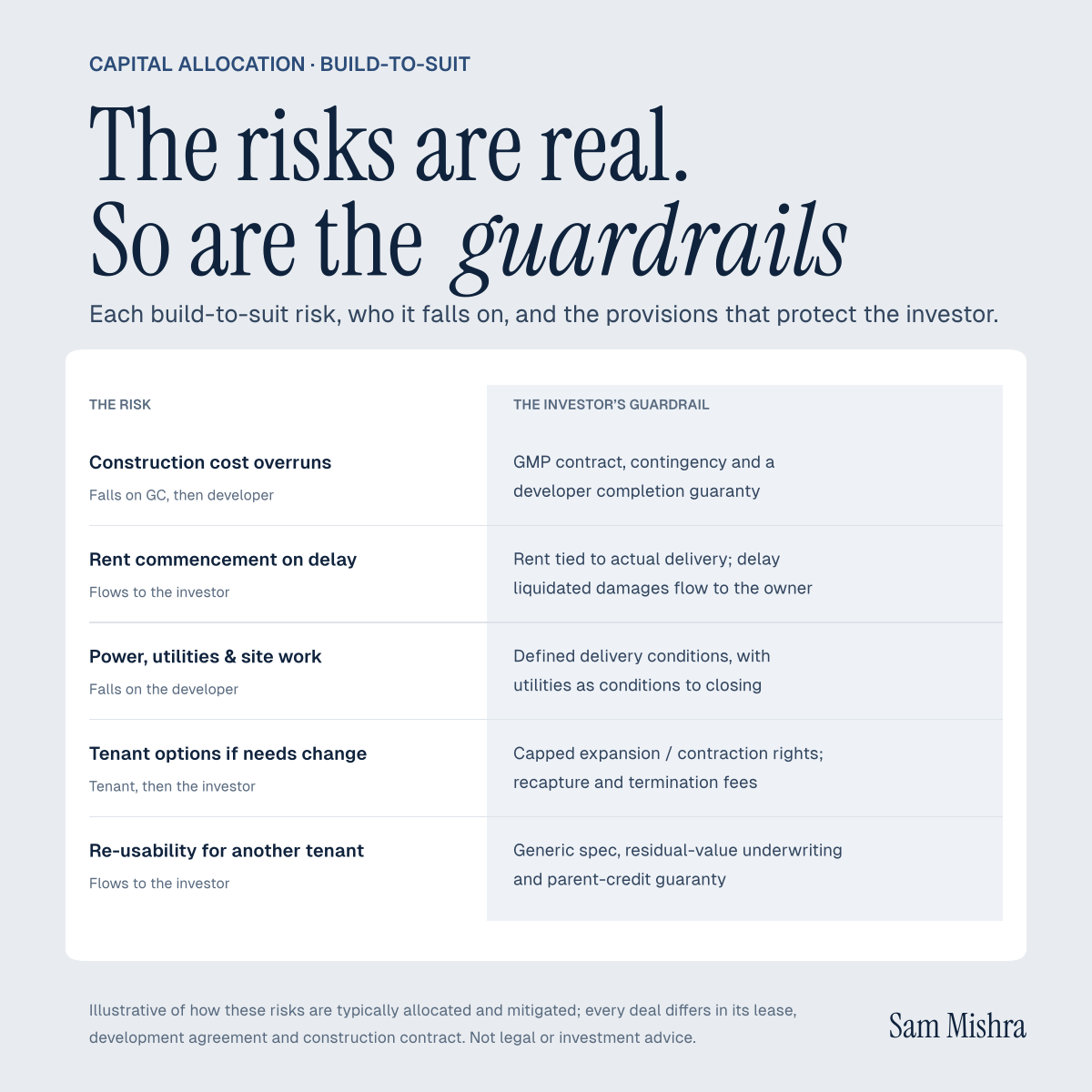
Before committing capital, I want to understand:
- Who bears construction cost overruns?
- When does rent commence if delivery is delayed?
- Are power, utilities and site improvements clearly addressed?
- What options does the tenant have if its requirements change?
- How readily could the building serve another user?
These questions matter because a facility designed around one occupant may have limited alternatives if the original business plan changes. Re-tenanting costs and conversion time can materially affect the downside.
That is why due diligence should test more than whether the base case works. It should clarify what happens when assumptions do not hold, and whether the risks are priced and allocated appropriately.
The model shows the expected return.
The lease and project documents help determine who carries the risk when reality differs from the model.