September 2026 · REITs
Public vs. private REITs and the cost-of-capital gap
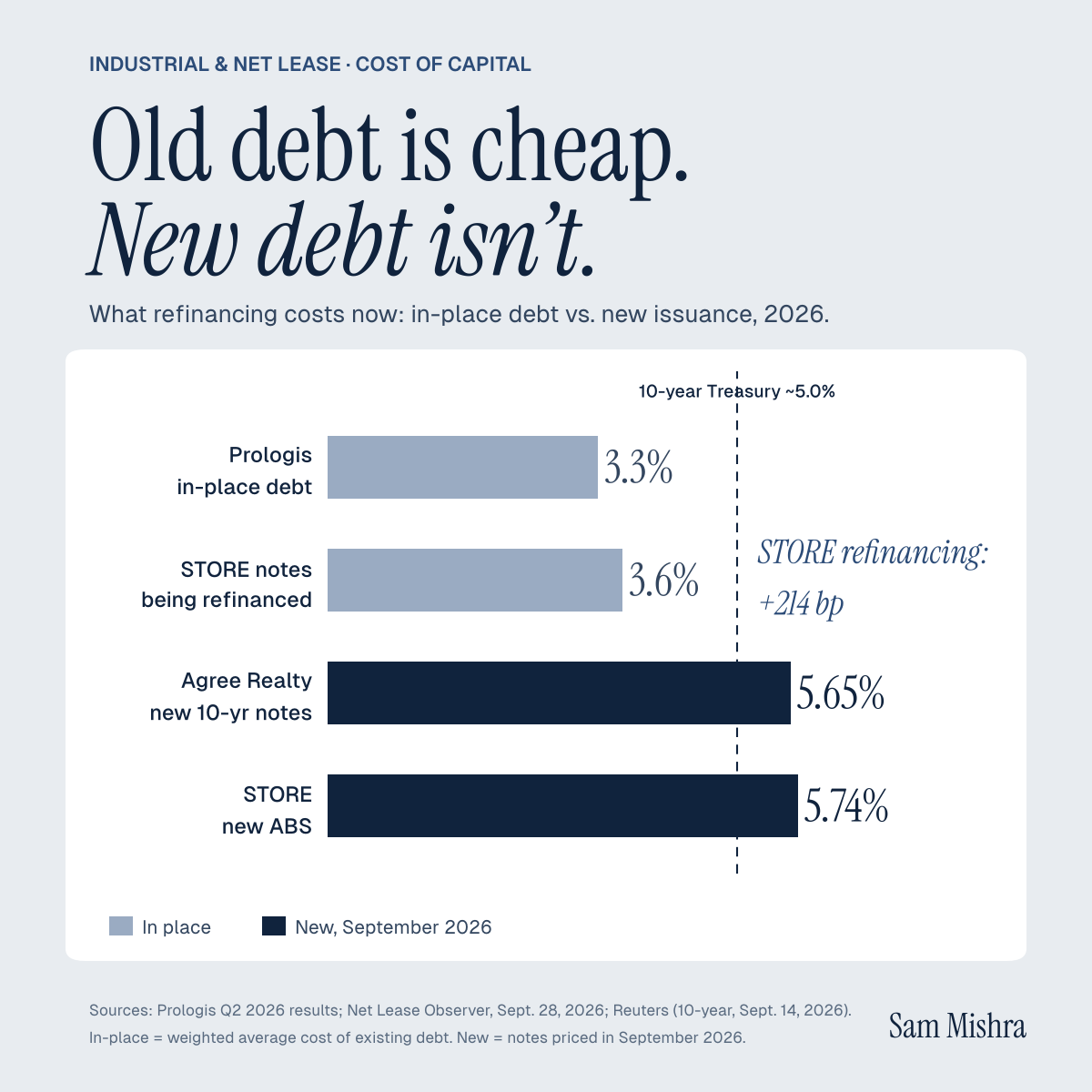
The 10-year crossed 5% on September 14. Two days later the Fed raised rates for the first time since 2023. Listed net lease and industrial REITs repriced through the autumn, several of them down double digits from their highs for the year.
This is about the discount rate, not the underlying real estate. Operating results held up — record leasing among the industrial names, raised guidance at some of the net lease names. But for a REIT, the share price is the cost of equity: a high single-digit AFFO (adjusted funds from operations) yield is what new equity costs. Add new debt priced above a 5% Treasury, and the blended cost of capital rises while cap rates lag. The spread gets thin, which is why listed REITs have leaned on joint ventures with private capital rather than issuing shares into a weak print.
Do private REITs gain the edge?
On equity, yes for now. Appraisal-based NAVs lag, so they can keep raising money at marks that haven’t come down.
On debt, no. Their secured, asset-level loans and hedges reprice property by property as they mature. The large listed net lease and industrial REITs fund almost entirely with unsecured, mostly fixed-rate bonds at long average terms, so their cost of debt drifts up slowly rather than resetting.
As listed valuations move, private marks eventually follow — appraisals catch up on their own schedule, not the market’s.
My take: private REITs have an equity advantage that’s temporary, and public REITs have a debt advantage that’s structural. Near term it’s a wash. Over a cycle, I’d bet on the balance sheet.
How are you seeing the cost-of-capital gap in your deals?