July 2026 · Site selection
Buildings are fixed. The strategy isn’t.
Every major industrial project begins long before a site is selected or financing is secured.
It starts with a series of strategic questions:
- Where will demand come from?
- How resilient is the supply chain?
- What level of flexibility will the business need five or ten years from now?
The answers shape everything that follows, from capital allocation to where companies decide to build. They also fix a great deal about the building itself, well before anyone draws it.
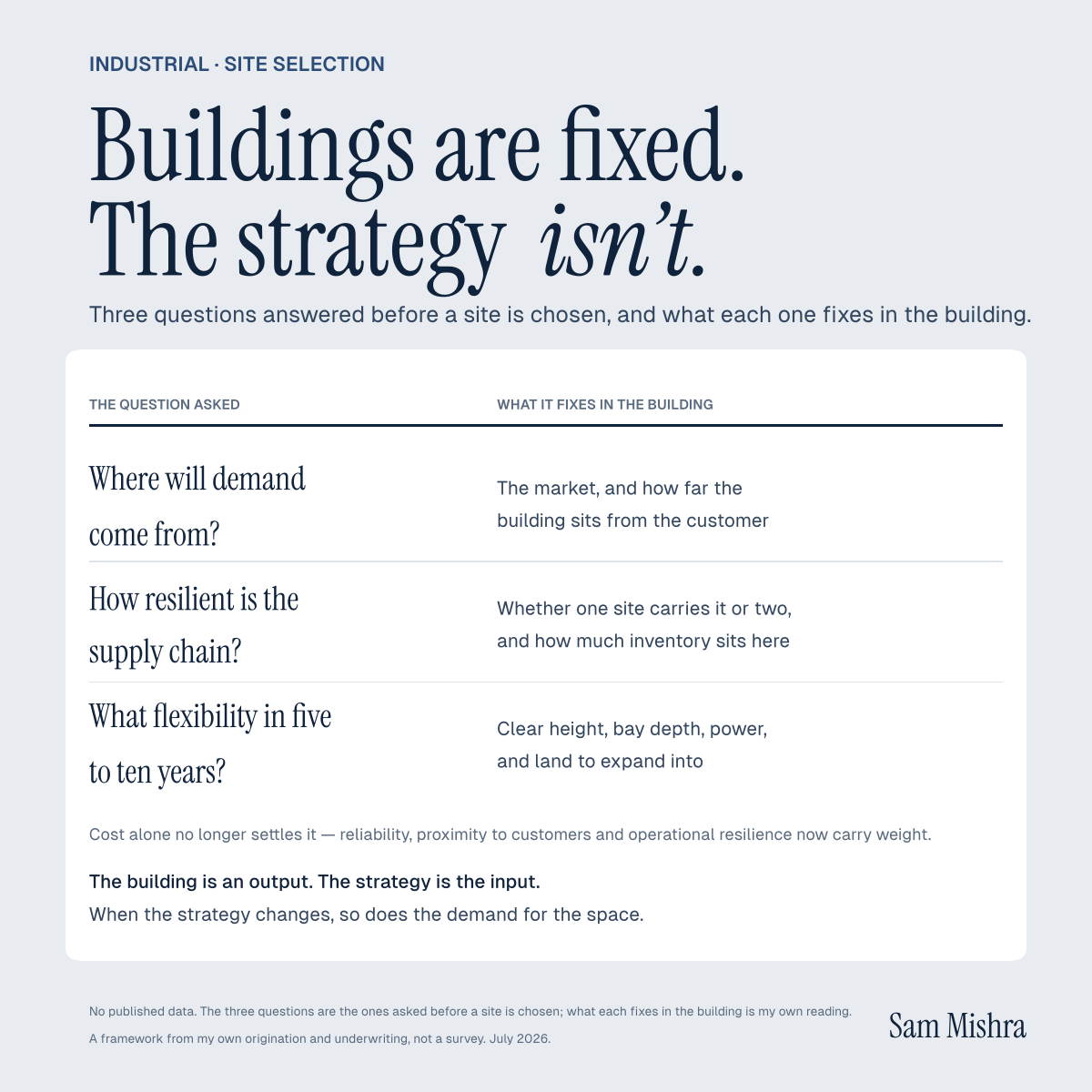
That is one reason industrial real estate continues to grow alongside broader economic trends. Manufacturing, logistics and distribution are becoming more integrated, and companies are looking beyond cost alone. Reliability, proximity to customers and long-term operational resilience have become increasingly important parts of the equation.
Which is why the lease and the specification are worth reading as evidence rather than as paperwork. Both are the record of a decision taken upstream, by someone who already knew what leaving would cost.
Buildings are often viewed as fixed assets. They are really a reflection of business strategy.
What will have the biggest influence on industrial site selection over the next decade?