November 2026 · Underwriting
A premium has a shape.
Two build-to-suits. Same tenant, same term, same cost. One rents 11% over market for twenty years. The other rents 37% over market for five years, then drops to market. Each lands on a comp sheet as one number. The sheet can’t say which one lasts.
The buyer who inherits the building can.
A build-to-suit usually rents above the market comp; that’s how the developer recovers what the comps never built. The question isn’t whether there’s a premium, but what shape it takes.
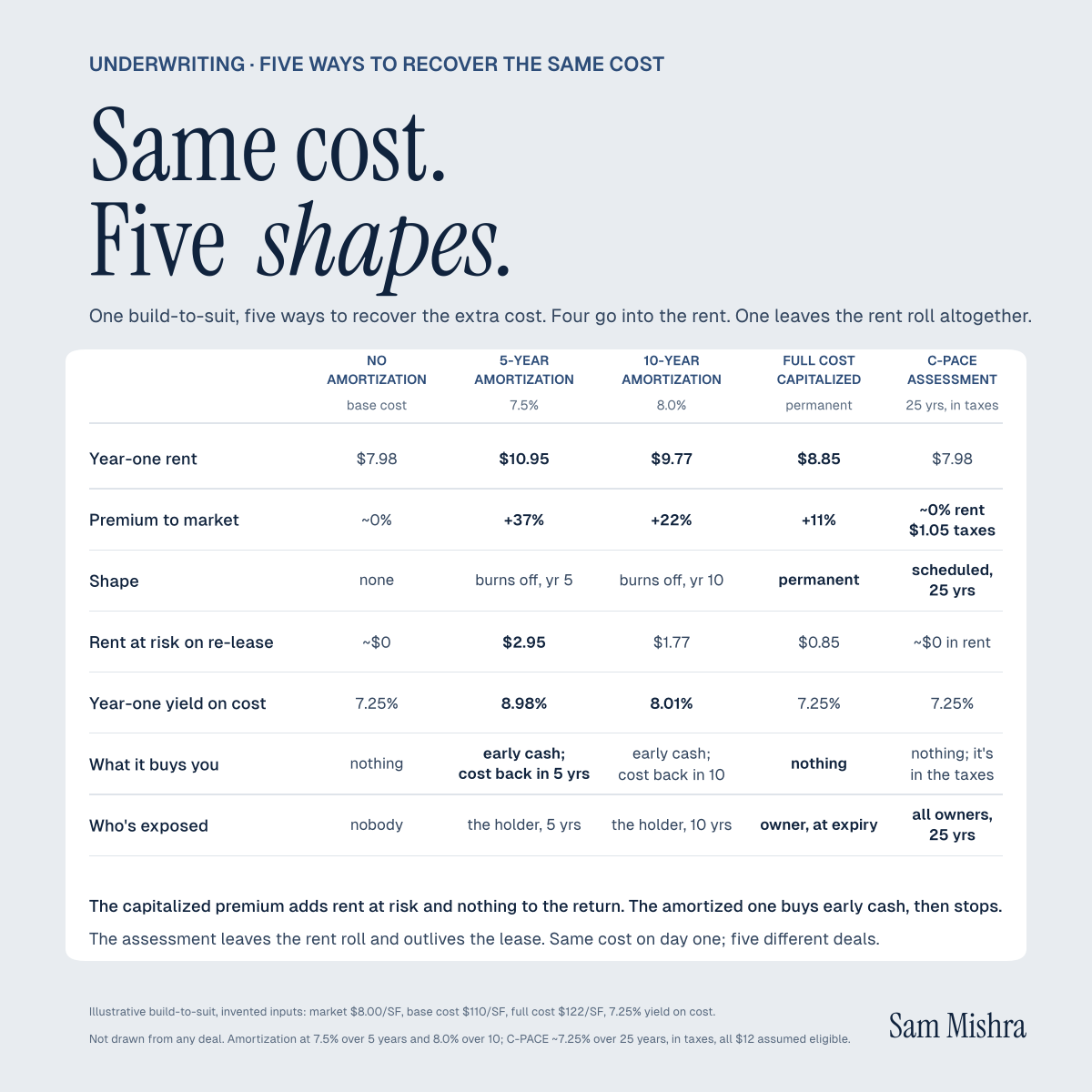
→ Capitalized into rent, the premium is small and permanent. Twenty years later it’s still there.
→ Amortized over a few years, the premium is large and then gone. For those years it lives in the tenant’s credit; then you own a building at market.
And a premium that only recovers cost, in either shape, raises the rent at risk and adds nothing to the return. That’s risk you weren’t paid for.
The shape decides who holds the risk.
Hold through the amortization and you get the early cash, then a building at market. The bet is the tenant, for five years.
Buy or sell on year-one rent and a payment that stops is capitalized as if it won’t. Whoever owns the building next inherits the shape, so the seller pricing on year-one rent most needs to know it.
Hold a rated tenant twenty years at a permanent premium and the credit is the smaller question. The rent is above market the day the lease ends; the whole bet is what the building is worth then.
A credit-rated tenant and an unrated one are two different problems.
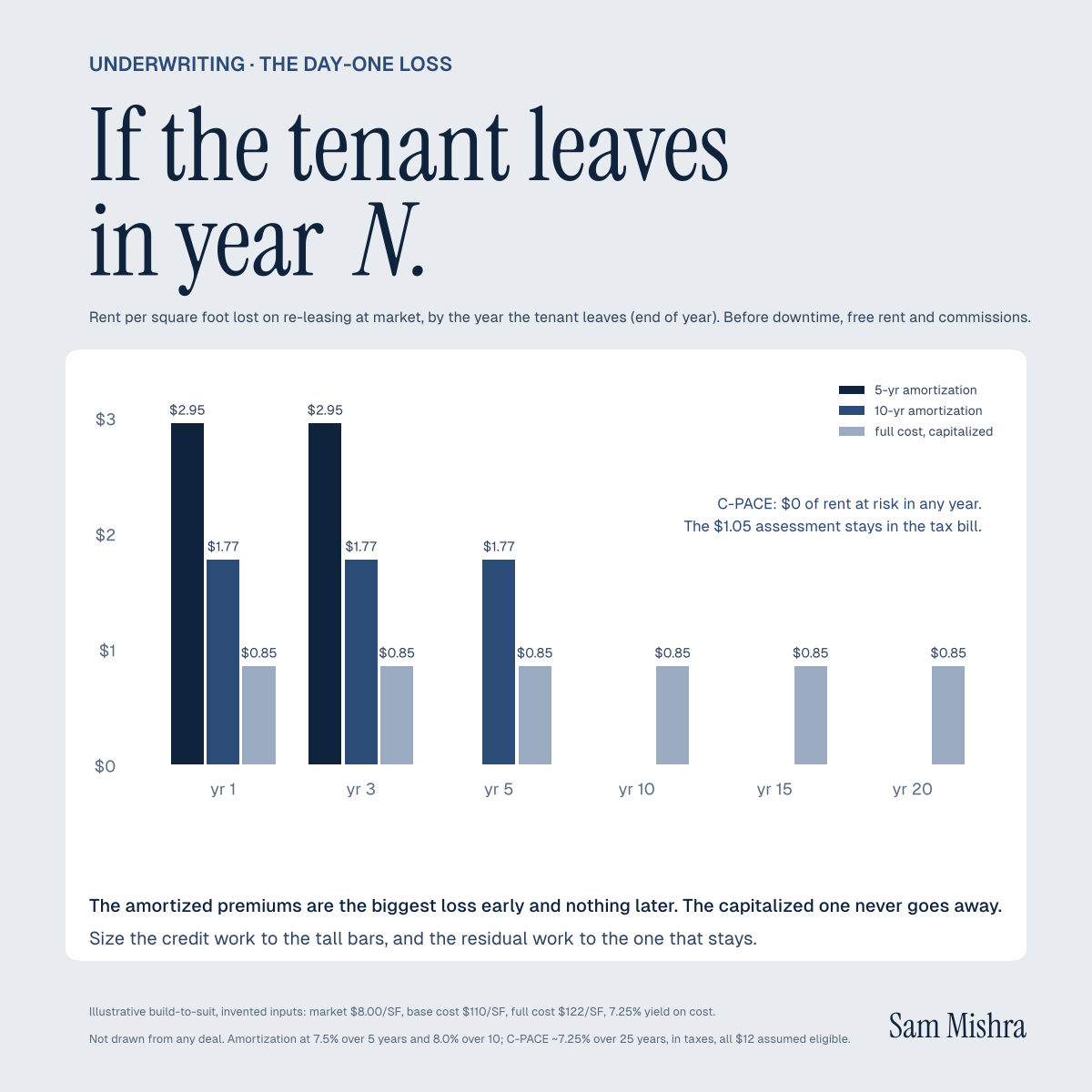
For a rated tenant, most of the premium is the bond spread showing up in rent. Compare yield on cost to the stabilized cap rate and the tenant’s bonds. What’s left is residual risk; the comp sheet can’t see it, the fit-out prices it.
For an unrated tenant, the premium is the credit bet. If the tenant leaves, the premium is the day-one loss on re-lease, before downtime, TI and commissions. Return per dollar of rent at risk is the number; a premium that only recovers cost has a poor one.
What to check, either way: market rent is what the space re-leases for today, not the best comp. Remaining term against the loss. Concentration, liquidity, how hard the tenant is to move. Unrated: a guarantee or deposit sized to the loss.
There’s a fifth shape. Put the eligible cost in a C-PACE assessment and it leaves the rent roll: a 20- to 30-year fixed payment in the tax bill, attached to the building through each sale. Only part of the cost usually qualifies, it isn’t always cheaper, not every state, lender or tenant takes it, and it outlives the lease unless you match the term. But it’s the one shape written down for whoever follows. It gets a note of its own.
The comp sheet shows the rent. It doesn’t show when the rent stops, or who’s holding the building when it does.