September 2026 · 1031 & DST
The 1031 exchange market is becoming more institutional
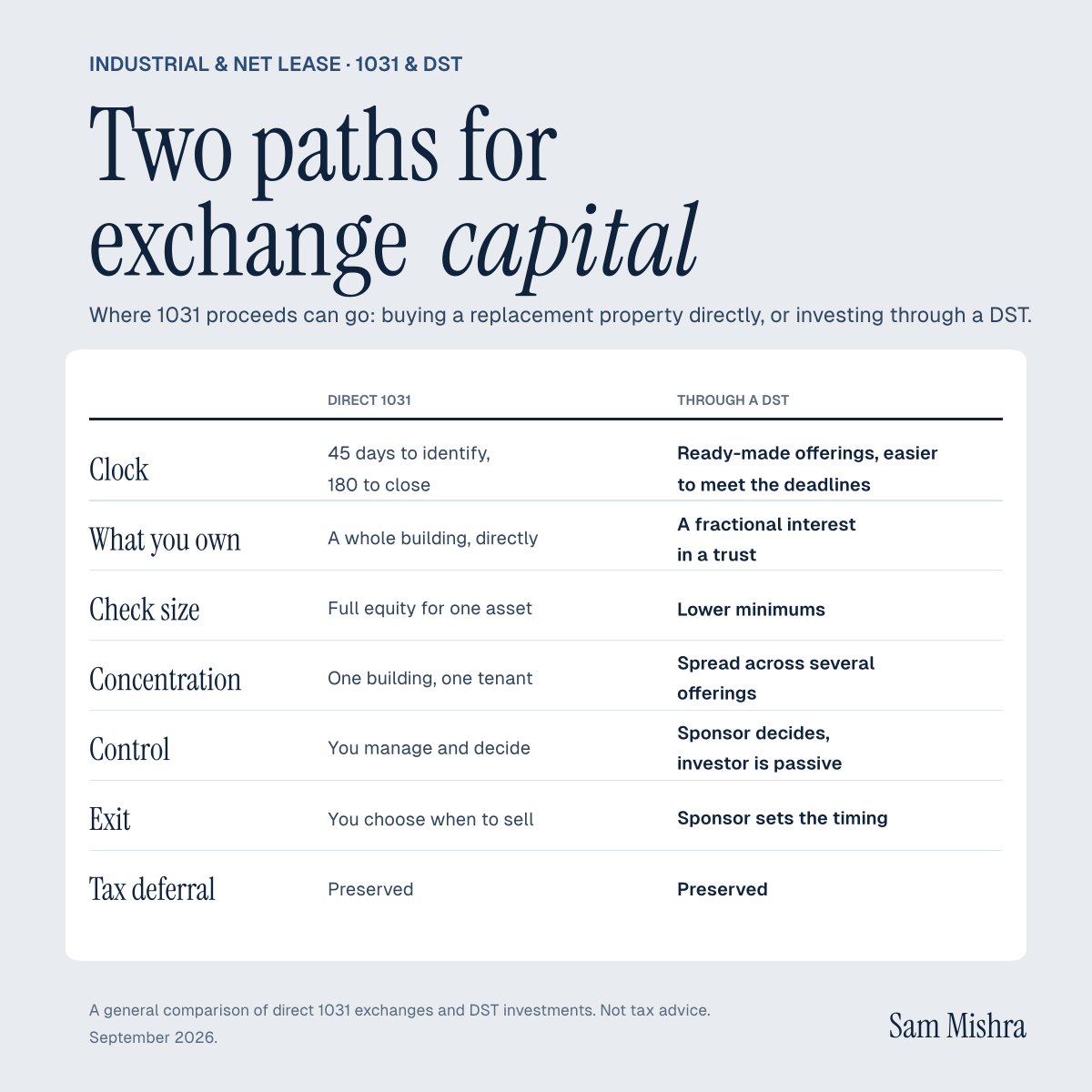
The traditional model was simple. Sell a property, identify a replacement within 45 days and close within 180. More investors are now directing exchange proceeds into Delaware Statutory Trusts (DSTs), gaining fractional ownership while preserving the tax benefits of a 1031 exchange.
DST fundraising reached approximately $5.5 billion through July, up 31% year over year, putting 2026 on pace to surpass the previous record.
The overlap with net lease is direct. Sponsors like Cove Capital are acquiring single-tenant industrial and retail assets to seed new DST offerings, including a Frito-Lay distribution center, a Tractor Supply store and an industrial warehouse leased to a publicly traded tenant.
I think the bigger story is how capital is adapting. DSTs reduce the time pressure that has long defined 1031 exchanges while creating another source of demand for high-quality net lease assets. Lower investment minimums also allow investors to diversify rather than concentrate capital in a single building.
Net lease has become a more accessible destination for exchange capital. As more capital flows through institutional structures like DSTs, demand for well-located and credit-backed properties continues to deepen.
Follow-up · October 2026DST demand is running ahead of supply →